


Running a beauty salon in the UK has become increasingly challenging as rising operating costs and pressure on household budgets affect both businesses and their customers. For beauty professionals, maintaining profitability often means finding new ways to generate revenue without taking on the expense of opening additional premises.
One opportunity worth exploring is specialist body sculpting training. By learning to deliver non-surgical body contouring treatments, established salon owners can potentially expand their services, attract different customers and make better use of their existing treatment rooms.
However, introducing advanced aesthetic technology requires more than purchasing equipment. Practical training, appropriate insurance and a realistic business plan are essential.
Why diversifying salon services makes financial sense
Traditional beauty treatments such as manicures, waxing and facials remain valuable services, but relying on a limited treatment menu can leave salons vulnerable when customer spending habits change.
Adding specialist body contouring treatments may provide an additional revenue stream without requiring an entirely new business.
Some body sculpting procedures also involve relatively low consumable costs once equipment has been purchased, potentially allowing salons to achieve attractive margins on individual appointments.
However, equipment maintenance, training, insurance, staffing and marketing expenses must all be considered before calculating profitability.
For beauty professionals investigating body sculpting training courses in the UK, choosing a programme that includes practical instruction can be an important step towards introducing these services responsibly.
Why in-person training matters
Although online courses can provide useful theoretical knowledge, working with specialist aesthetic equipment requires practical skills.
Practitioners need to understand how to position applicators, adjust equipment settings, conduct consultations and recognise when a treatment may be unsuitable.
Hands-on training also provides an opportunity to practise techniques under supervision and ask questions about real treatment scenarios.
Many UK insurers have specific training requirements for body contouring services, making it important to check whether a chosen qualification will be accepted before enrolling.
A course certificate alone does not automatically guarantee insurance eligibility or permission to offer every treatment.
Fat freezing training for existing salons
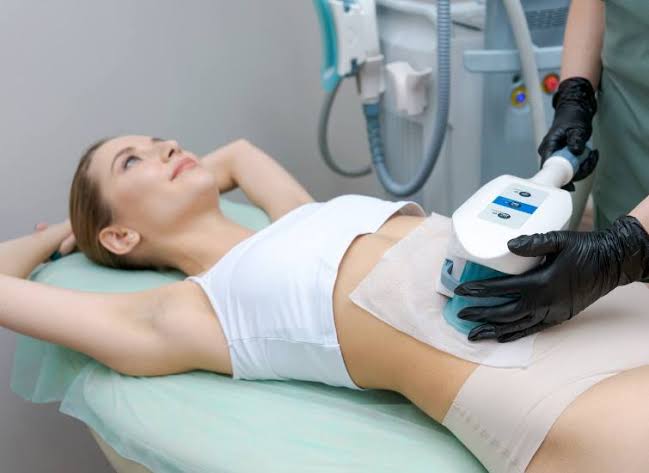
Fat freezing is one specialist treatment that may appeal to salon owners looking to expand into non-invasive fat reduction.
The technology uses controlled cooling to target selected deposits of fatty tissue beneath the skin.
Although it avoids surgical incisions, practitioners must understand treatment suitability, contraindications and potential complications.
Completing an in-person fat freezing course can help beauty professionals develop practical knowledge of equipment operation, applicator placement, client assessments and aftercare.
For established salons, offering this type of treatment may create opportunities to reach customers interested in reducing localised fatty deposits.
However, results are variable, and treatments should never be marketed as guaranteed weight loss solutions.
Ultrasound cavitation and radiofrequency training
Another option for salons is ultrasound cavitation, often offered alongside radiofrequency body treatments.
Ultrasound cavitation uses sound wave energy to affect fatty tissue, while radiofrequency technology uses controlled heating that may encourage collagen remodelling and improve the appearance of mild skin laxity.
The effectiveness of these treatments depends on the equipment, treatment protocol and individual circumstances.
An in-person ultrasound cavitation training course can help practitioners understand the different technologies, appropriate treatment techniques, equipment maintenance and client safety.
Offering complementary treatments may allow salons to develop more varied body contouring menus and suitable treatment packages.
Investing carefully during uncertain economic conditions
When business costs are rising, investing in new equipment can feel risky.
Salon owners should therefore research local demand, compare equipment suppliers and calculate the number of appointments required to recover their investment.
It may be more practical to introduce one new service successfully before expanding into additional technologies.
Existing clients can provide useful insight into which treatments might generate genuine interest.
Salon owners should also consider whether their premises have sufficient space and whether their insurance covers the proposed procedures.
The long-term value of specialist skills
While economic uncertainty can make expansion difficult, professional development may help beauty businesses adapt to changing customer expectations.
In-person body sculpting training offers an opportunity to develop technical skills, improve treatment knowledge and explore new services within an established salon.
The strongest business opportunities are likely to come from combining appropriate training with sensible financial planning, transparent marketing and consistent customer care.
For UK beauty professionals looking to strengthen their businesses during challenging times, expanding into specialist body sculpting could be a worthwhile option, provided the investment is carefully researched and supported by suitable qualifications.