






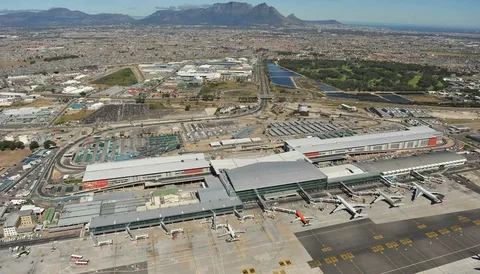
Cape Town International Airport (often just called Cape Town Airport) is hands-down one of the most important aviation hubs in Africa. It serves as the main international and domestic gateway to the stunning Western Cape region of South Africa, welcoming millions of visitors every year who come for the beaches, wine farms, Table Mountain, and everything else that makes Cape Town so special.
In 2025, the airport hit a massive milestone by handling a record-breaking 11.1 million two-way passengers (that’s arrivals plus departures combined). That’s the first time it’s ever crossed the 11-million mark, with international passengers jumping 7% to about 3.3 million and domestic ones also up 7% to 7.8 million. December alone saw over 1.12 million people passing through—another record, showing just how busy the festive season gets here.
Sitting roughly 20 km southeast of the city center, the airport’s location is perfect. Hop on the N2 highway and you’re quickly in the heart of Cape Town, or you can head out to the Winelands, the coast, or further afield. Getting around is pretty straightforward—plenty of taxis, ride-hailing apps like Uber, shuttles, MyCiTi buses, and car rental desks right in the terminal.
What I really like about Cape Town Airport is how user-friendly the single terminal setup is. Unlike some airports where you have to trek between separate domestic and international buildings, everything here is under one roof. That makes navigation so much easier—no confusing transfers or long walks. You check in, go through security, and you’re at your gate without much hassle.
The departures area has all the usual check-in counters, security (which moves surprisingly quickly), shops, and eateries. Arrivals lead straight to baggage claim, customs, and ground transport. Digital screens are everywhere, staff are helpful, and even during peak times it doesn’t feel overwhelmingly chaotic.
Domestically, it’s a busy hub with frequent flights to Johannesburg, Durban, Gqeberha (Port Elizabeth), and other South African cities—great for quick hops around the country. Internationally, it connects to Europe (especially the UK, Germany, Netherlands), the Middle East, parts of Asia, and growing routes across Africa. Airlines range from big full-service names like Emirates, Qatar Airways, British Airways, and KLM to budget options, giving travelers lots of choices.
Facilities-wise, it’s solid. Free Wi-Fi keeps you connected, there are lounges for business travelers or anyone wanting some peace (with comfy seats, food, drinks, and charging points), currency exchange, ATMs, baggage wrapping, and good support for passengers with reduced mobility. Shopping includes duty-free, local souvenirs, fashion, and electronics. For food, you’ve got everything from grab-and-go coffee spots and quick bites to sit-down restaurants serving South African favorites like bobotie or braai-inspired dishes alongside international options.
Security and efficiency are strong points too—the airport meets top international standards, and processes like immigration and baggage tend to be smooth, which is a big plus for passenger satisfaction.
Getting out of the airport is easy: car rentals are right there for exploring on your own, taxis and rideshares are plentiful, and shuttles run to hotels and key spots around the city.
The airport plays a huge role in Cape Town’s tourism boom and the local economy. It’s the entry point for most international visitors heading to iconic spots like Table Mountain, Robben Island, the penguins at Boulders Beach, or the wine routes. It also supports business events, conferences, and trade, helping keep Cape Town on the global map.
On the sustainability side, the airport has been stepping up with energy-efficient systems, waste reduction programs, water conservation, and moves toward things like more electric vehicle infrastructure and greener building practices (some parts have LEED certification). It’s part of a broader push to make operations more responsible.
And the awards keep coming—Cape Town International regularly tops lists as Africa’s best airport, and it’s earned high marks globally for passenger experience, cleanliness, and service. Travelers often rave about the friendly staff and how organized everything feels.
Looking ahead, with passenger numbers climbing, there are plans for upgrades and expansions through the late 2020s—think better capacity, new facilities, and infrastructure tweaks to handle even more growth while keeping things efficient and comfortable.
All in all, Cape Town International Airport is a modern, welcoming gateway to one of the world’s most incredible destinations. Whether you’re here for a beach holiday, a wine tour, business, or just passing through, it makes the start (or end) of your trip feel smooth and stress-free. It’s a big reason why so many people fall in love with the Western Cape the moment they land.