


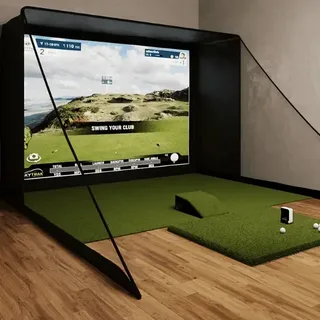
Golf enthusiasts have long dreamed of the ability to practice their swing or play a round of golf without leaving the comfort of their home. Thanks to advancements in technology, this dream is now a reality with in-home golf simulators. These innovative systems allow golfers of all skill levels to enjoy a realistic golfing experience indoors. In this article, we’ll explore what an in-home golf simulator is, its benefits, and how you can get started with one.
What Is an In-Home Golf Simulator?
An in-home golf simulator is a high-tech system that replicates the experience of playing on a golf course. These simulators use advanced sensors, cameras, and software to track your swing, ball flight, and other factors to provide a realistic simulation of a golf game. Whether you’re practicing your swing, improving your putting, or playing a simulated round of golf, the in-home golf simulator offers a highly interactive experience without the need to leave your house.
Components of an In-Home Golf Simulator
To understand how an in-home golf simulator works, it’s important to know the key components involved. A typical simulator setup includes:
- Launch Monitor: This device tracks the speed, angle, and spin of the ball after it’s hit. It plays a crucial role in providing accurate data to the software for realistic simulation.
- Projector: A high-quality projector displays the golf course onto a screen or impact screen, providing a life-like view of the course.
- Screen or Net: The screen serves as the backdrop for the projected course, and sometimes it also functions as the target for your ball. In some setups, you can opt for a net if you prefer a smaller footprint.
- Software: The software integrates with the launch monitor and the projector to create the golf course simulation. It often includes features such as a variety of golf courses to choose from, shot analysis, and even virtual competitions.
- Sensors and Cameras: These devices track the movement and trajectory of the ball to ensure the simulation is as accurate as possible.
Why Choose an In-Home Golf Simulator?
Convenience and Accessibility
One of the primary reasons golfers opt for an in-home golf simulator is the convenience it provides. No longer do you need to schedule tee times, drive to a golf course, or worry about weather conditions. With an in-home setup, you can practice or play at any time that suits you, whether it’s day or night.
Improve Your Game
An in-home golf simulator offers invaluable opportunities to improve your game. The data collected from your swings, ball speed, distance, and spin can help you analyze your performance and identify areas for improvement. Many simulators also provide instant feedback, allowing you to make adjustments in real-time. Whether you’re working on your driving, short game, or putting, you’ll be able to practice with precision.
Entertainment and Socializing
In addition to being a training tool, an in-home golf simulator can also be a fun way to entertain friends and family. Many simulators offer multiplayer options, allowing you to play virtual rounds with others. Whether it’s a friendly competition or just a way to spend time together, having a golf simulator at home can be a great source of entertainment.
How to Get Started with an In-Home Golf Simulator
Choose the Right Space
Before investing in an in-home golf simulator, it’s essential to choose the right space. Most simulators require a room with adequate height, width, and length to allow for a full swing. Ideally, you’ll need at least 10 feet of ceiling height and 15 feet of depth. A basement, garage, or large spare room can serve as the perfect location for your setup.
Selecting the Best Simulator for Your Needs
There are various options available in the market, ranging from affordable systems for casual golfers to professional-grade setups for serious players. When choosing your simulator, consider factors such as:
- Budget: Determine how much you’re willing to spend. Simulators can range from a few hundred to several thousand dollars, depending on the features and quality.
- Space Requirements: Make sure the simulator you choose fits within your available space.
- Features: Look for a system that provides accurate data tracking, realistic course simulations, and ease of use.
- Additional Equipment: Some simulators may require extra equipment, such as high-quality golf clubs or impact screens, so plan accordingly.
Installation and Setup
Once you’ve chosen your simulator, setting it up is relatively straightforward but may require professional assistance for calibration and installation, especially for high-end systems. Some manufacturers provide support and detailed instructions for setting up the system yourself.
Conclusion
An in home golf simulator is a fantastic investment for anyone looking to improve their golf game or simply enjoy the sport from the comfort of their own home. With convenience, advanced technology, and a host of benefits, it’s no wonder that more golfers are turning to indoor simulators as a viable option for practicing and playing. Whether you’re aiming to perfect your swing or looking for a new way to enjoy golf with friends, an in-home simulator is a game-changer.
