






A house can cost more to build when workers spend hours on repeated, slow tasks. Robots could take on some of that work, but lower prices will depend on design, planning, and local building rules too.
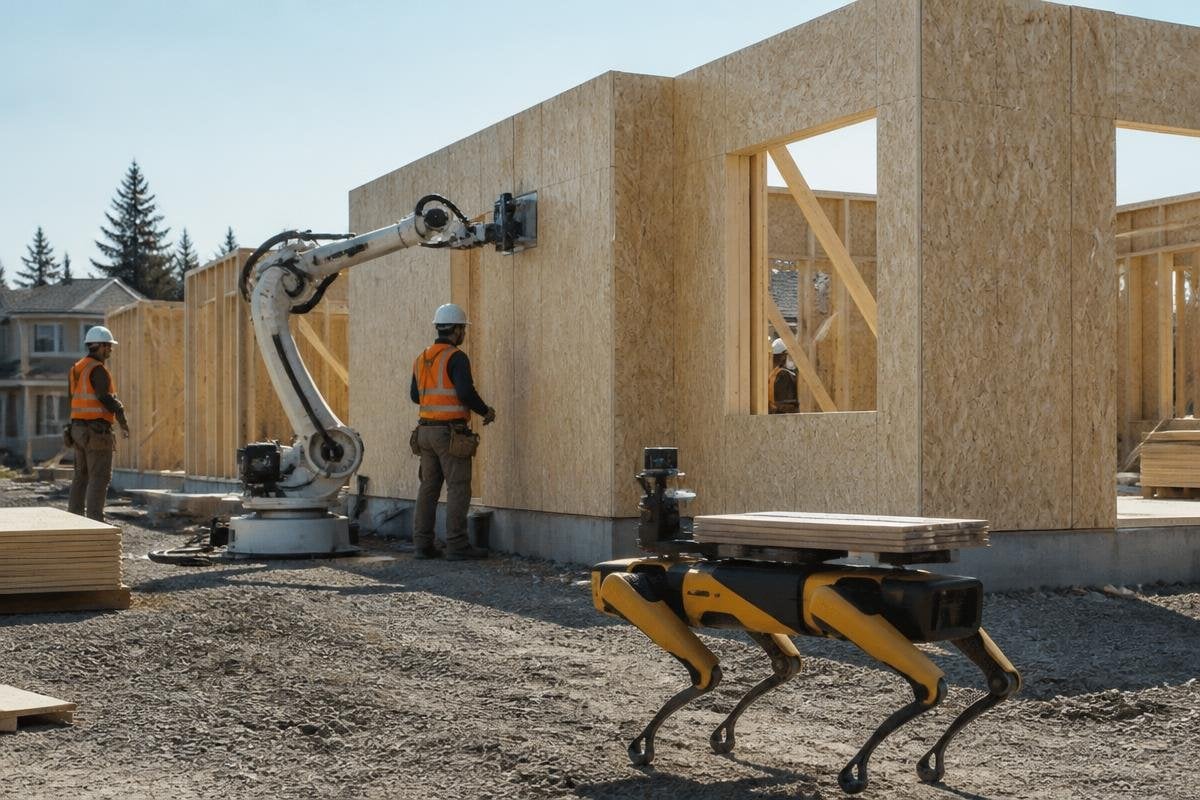
- Robots may handle repeated site work such as brick placement, drilling, or material movement.
- Factory-built parts can give robots a more controlled place to work.
- Lower labor time will matter only if builders pass part of the saving to buyers or renters.
Where robots fit on a building site
Construction robots are most useful when a task repeats in the same way. One robot arm can place materials along a planned path. A mobile robot can carry supplies across a site. A machine with a camera can check a surface or record the position of installed parts.
Those jobs still need people to plan the work, inspect the result, and deal with changes. Building sites rarely stay fixed. Rain, uneven ground, missing materials, and other teams can force a machine to stop or change its route.
This makes robot selection a practical question. A machine built for a factory floor may need extra sensors, protection, or software before it can work safely beside people outdoors. The robot also needs a clear task and a place where it can repeat that task often enough to cover its cost.
Factory work may be easier to control
Some housing parts can be made indoors before they reach the site. Wall panels, floor sections, bathroom units, and roof parts can follow a set design in a factory. That setting gives robots a level floor, fixed power, known materials, and fewer changes around the work area.
The result may be a steadier process. A robot can repeat a cut or fastening motion while a person checks fit and finish. Workers can then spend more time on wiring, plumbing, inspection, and the parts of construction that still need judgment.
Factory work also changes the problem. A builder must pay for transport, lifting equipment, and a place to make the parts. If a design changes late, the factory may have to stop and reset its tools. The savings depend on the whole process, not on the robot alone.
For housing robots, the useful question is whether a machine has built full-size parts on a real site, at a stated cost and with how much human labor. A report from Robot24.com can put those details beside a factory demo before the next section breaks down where the savings go.
The price question has several parts
One machine can reduce the time spent on one task without making a home cheaper. The buyer still pays for the machine, software, repairs, training, safety systems, site setup, and the staff who run it.
Builders also need enough work to keep the machine busy. Housing designs may need to change too. Straight walls, repeated room sizes, and standard connection points give machines fewer decisions to make. That can lower waste and make production easier, but it may limit the range of homes a builder can offer.
I’d support robot projects that publish the full cost of the job, including setup and repair time. A lower labor bill on one task tells you little if the machine sits unused for most of the month.
Limits that builders need to solve
Safety comes first when robots share space with workers. The site plan needs clear work zones, stop controls, checks before motion, and a way for people to work near the machine without guessing where it will move.
Training matters as well. A builder may need staff who can read robot status data, change a tool, check a sensor, and restart the system after a stop. That creates new work, even when the robot removes part of an old task.
Small builders may face a harder choice than large firms. A rental service or shared robot fleet could spread the cost across several projects, but that model would need reliable transport, fast repair, and clear responsibility when work stops.
A practical test for a housing robot
Before buying or funding a system, check these points:
- Name the task: measure the hours spent on one repeatable job.
- Price the full setup: include tools, software, training, repairs, and site changes.
- Check the site: confirm the floor, weather, power, access, and work area suit the robot.
- Set a human check: decide who inspects each result and who can stop the machine.
- Measure the outcome: track build time, material waste, rework, and total cost per home.
A project that passes those checks still needs a housing plan behind it. Cheaper construction helps only when the design, land cost, finance, permits, and sales price support lower rents or purchase prices.
The next useful test is a small housing project with public cost records. Until builders show the full cost per home before and after automation, robots remain a promising construction tool rather than proof of cheaper housing.